How to Find Lithuanian Ancestry Records: A Guide to Archives and Research
A practical guide to locating vital records held across Lithuanian state archives, diaspora databases, and international collections.
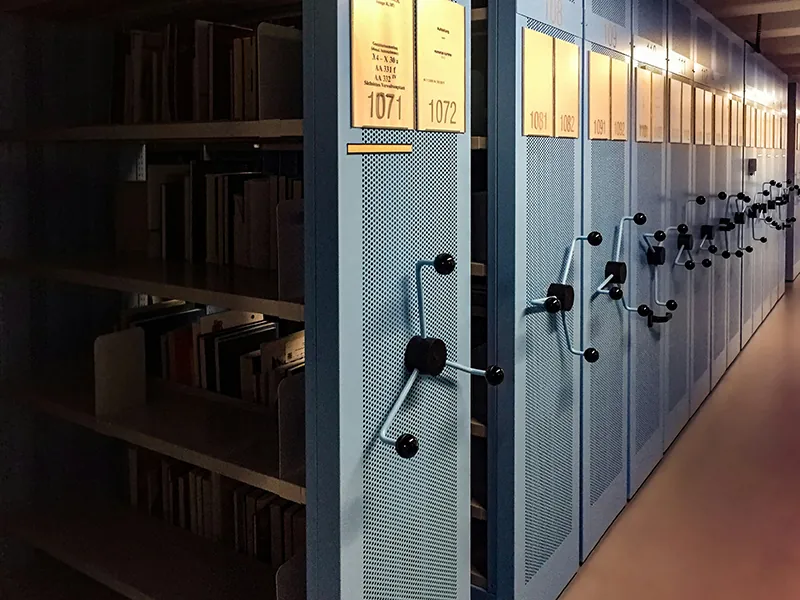
Where are Lithuanian ancestry records held? Lithuanian vital records — birth, marriage, and death certificates — are distributed across multiple Lithuanian state archives and international collections. The Chief Archivist of Lithuania coordinates access to the national archive network and can issue official archival certificates accepted by the Migration Department when original documents cannot be located. Jewish Litvak records require additional sources including Jewish community archives and diaspora databases.
Published: May 2026 · Reviewed by our Lithuanian citizenship specialists.
Why Archival Research Matters for Citizenship Restoration
Lithuanian citizenship restoration is a document-based process. The Migration Department requires an unbroken documentary chain proving your ancestor held Lithuanian citizenship before June 15, 1940. For many applicants, especially those whose families emigrated two or three generations ago, assembling this chain requires archival research — tracking down records that were never in family hands to begin with.
The good news: Lithuanian archives are among the better-preserved in Eastern Europe, and professional research can locate substitutes for documents that appear to be missing. This guide explains where to look and what each archive holds.
What Are the Main Lithuanian State Archives?
The Lithuanian archive network, overseen by the Chief Archivist of Lithuania, includes several institutions relevant to citizenship research:
Lithuanian State Historical Archives (LVIA)
The primary repository for pre-WWII records, including metrical books (church-registered births, marriages, deaths), land records, and interwar civil registration documents. This is the most important archive for citizenship research covering the 1918–1940 period. LVIA holds records from across the country and from communities that no longer exist in their original form.
Regional State Archives
Lithuania's regional archives (in Kaunas, Šiauliai, Panevėžys, Utena, and Telšiai) hold local records for specific geographic areas, including parish registers, census data, and interwar administrative records not held centrally in LVIA.
Lithuanian Central State Archives (LCVA)
Holds records from the interwar Republic of Lithuania (1918–1940), including government employment records, military service files, and official citizenship documents. If your ancestor served in the Lithuanian army or worked in government, this is the relevant archive.
Special Archives of Lithuania
Contains records from the Soviet occupation period, including KGB files and Soviet-era registration documents. Relevant when tracing family members who remained in Lithuania after 1940.
Where Are Jewish Lithuanian (Litvak) Records Held?
For descendants of the Litvak Jewish diaspora, records are more dispersed — the result of deliberate destruction during the Holocaust and dispersal through emigration. Several key collections survive:
Lithuanian State Historical Archives (LVIA) — Jewish metrical books
LVIA holds a significant collection of Jewish community (Kahal) metrical books — birth, marriage, and death registers — from communities across historical Lithuania. Many of these have been partially catalogued and some are accessible through JewishGen's JRI-Poland database, which covers Jewish records from the broader historical region including Lithuania.
Vilna Gaon State Jewish Museum (Vilnius)
The museum preserves cultural and documentary heritage of Lithuanian Jewry and holds archival collections relevant to Litvak genealogy research. It also maintains the Litvak community database and works with international researchers.
Arolsen Archives (Germany)
The Arolsen Archives hold the world's most comprehensive collection of documents relating to Holocaust victims and survivors, including Displaced Persons (DP) camp records. For Litvak families who passed through DP camps in Germany, Austria, or Italy after WWII, the Arolsen Archives can confirm names, dates, and places of origin — evidence that can substitute for missing Lithuanian records.
JewishGen and JRI-Poland
JewishGen (jewishgen.org) maintains the Jewish Records Indexing-Poland (JRI-Poland) database, which indexes Jewish vital records from historical Lithuania despite the name. It provides index-level access to millions of entries that can then be retrieved from the holding archives.
YIVO Institute for Jewish Research (New York)
YIVO holds the largest collection of Yiddish-language and Eastern European Jewish historical materials outside of Israel, including records from Lithuanian Jewish communities. Particularly valuable for pre-WWI research.
Can I Search Lithuanian Archives Online?
Some Lithuanian records are accessible digitally, but coverage is uneven:
ePaveldas (epaveldas.lt)
Lithuania's Cultural Heritage portal includes digitized historical documents, maps, and some archival records. Useful for background research, but not a comprehensive vital records database.
FamilySearch (familysearch.org)
The LDS Church's FamilySearch platform has digitized portions of Lithuanian parish registers and vital records. Coverage varies significantly by region and time period. Searching "Lithuania" on FamilySearch is a useful first step that costs nothing and may surface direct hits.
Ancestry.com
Contains some Lithuanian-relevant collections, particularly for records of Lithuanian emigrants to the USA, including naturalization papers and passenger lists. These can help trace when an ancestor left and confirm their Lithuanian origin, but typically do not contain Lithuanian citizenship evidence directly.
Most of the archival evidence accepted by the Migration Department — interwar passports, voter lists, military records, and civil registration documents — is not available through online databases. These require either in-person access at Lithuanian archives or commissioned professional research.
What If the Original Documents Cannot Be Found?
It is common — particularly for Litvak families and families displaced by WWII — for original interwar documents to be unavailable. The Migration Department has provisions for this scenario:
Archival Certificate from the Chief Archivist
The Chief Archivist of Lithuania can issue an official certificate confirming that an ancestor appeared in historical records held by the Lithuanian archive network — confirming residence, religious community membership, or citizenship-era status. This certificate is accepted by the Migration Department as substitute evidence. Obtaining it requires a formal research request to the archives, typically handled by a professional researcher or legal representative.
Voter List Entries and Pobūriniai
Official voter lists from the interwar period (1918–1940) and household census registers (pobūriniai) survive in significant numbers in LVIA and regional archives. These records list residents by name, family, and address and are accepted as evidence of presence and legal status in interwar Lithuania.
Military and Civil Service Records
The Lithuanian Central State Archives (LCVA) holds military personnel records from the interwar Lithuanian Army. If your ancestor served, a service record can confirm Lithuanian citizenship definitively. Similarly, government employment records document citizenship status for civil servants.
Newspaper Archives and Community Publications
Historical Lithuanian newspapers and community directories — some digitized through the National Library of Lithuania — occasionally contain references to individuals useful for genealogical research. These are supplementary sources, not primary evidence, but can corroborate a lineage.
Common Questions About Lithuanian Archival Research
How long does archival research take?
A basic records search through the Chief Archivist of Lithuania typically takes several months. Complex cases — particularly those involving Litvak records, regional archives, or records from destroyed communities — can take longer. Building this time into your overall planning is important, as the total citizenship process typically spans 8–14 months from complete document submission.
Can I submit a records request to Lithuanian archives directly?
Yes. The Lithuanian archive network accepts international research requests. The Chief Archivist's portal (archyvai.lt) provides contact information for submitting queries. However, requests must be specific — knowing your ancestor's approximate dates and community of origin significantly increases the chance of a successful response. Vague requests often return inconclusive results.
Are Lithuanian archives open to the public?
Lithuanian state archives are publicly accessible to researchers, including foreign nationals. Reading room access typically requires advance registration. Remote access and commissioned research are also available for applicants who cannot travel to Lithuania.
What languages are Lithuanian records written in?
Pre-WWII Lithuanian records are written in several languages depending on the record type and period: Lithuanian, Russian (in Tsarist-era records prior to 1918), Polish, German, Hebrew, and Yiddish. Interwar Republic of Lithuania records (1918–1940) are primarily in Lithuanian. Certified translations of any non-Lithuanian documents are required for the citizenship application.
We Handle the Archival Research
Locating the right records across Lithuanian, international, and diaspora archives is the most complex part of the citizenship process for most applicants.
Our team conducts research through LVIA, LCVA, regional archives, the Arolsen Archives, and diaspora databases — and coordinates with the Chief Archivist of Lithuania when official certificates are needed. We handle translations, Apostilles, and document submissions.
Request Archival Research